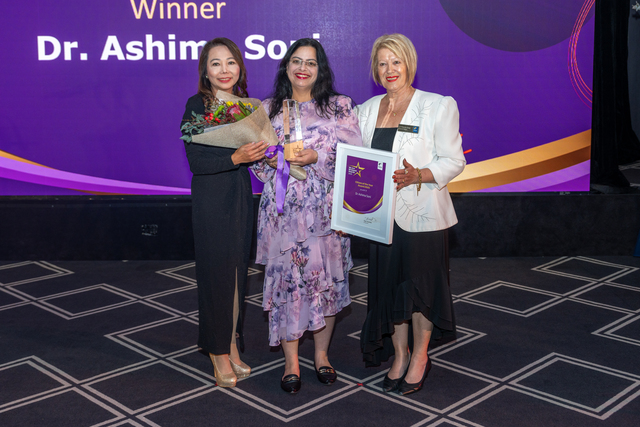
Dr Ashima Soni was recently named Brimbank’s Citizen of the Year for her work empowering those facing family violence and perinatal challenges. She talks to Laura Michell about her passion for community wellbeing.
What is your connection to Brimbank?
My connection to Brimbank began in 2015 when I participated in the Our Community, Our Rights project. As part of this initiative, I developed a resource booklet for women presenting at the Sunshine Magistrates’ Court to reinforce the message that family violence is unacceptable in all cultures. I played a key role in designing and launching Joining Hands: Working More Effectively with Indian Women and Families to Effect Change, a human rights resource developed to enhance collaboration between law enforcement and community support agencies. Professionally, I have served as a team leader in family violence programs and as a clinical psychologist across various organizations in Melbourne’s western suburbs, supporting residents of Brimbank through trauma-informed care and therapeutic interventions. In recognition of my long-standing commitment to community wellbeing, I was awarded the Woman of Excellence Award by Brimbank Shopping Centre in 2022. I currently volunteer on the Cohealth Community Advisory Group, where I contribute to inclusive, community-driven service planning and delivery. I am also a member of the Brimbank Local Community Reference Group, where I advocate for culturally sensitive, accessible mental health support through the Brimbank Local Mental Health Hub.
What do you like about where you live?
What I appreciate most about where I live is the vibrant multiculturalism. It’s inspiring to be part of such a welcoming and diverse community where people from all backgrounds coexist harmoniously. I’m fortunate to have kind, supportive neighbours who foster a strong sense of belonging. One of my favourite ways to unwind is by walking around the serene Cairnlea lakes—an oasis of nature and tranquillity right at my doorstep.
What, if anything, would you change about where you live?
If I could change one aspect of my community, it would be to reduce the incidence of crime. A safer environment would enhance residents’ quality of life and promote a greater sense of security and wellbeing throughout the neighbourhood.
How does it feel to be recognised as Brimbank’s Citizen of the Year?
As a first-generation migrant from India, I am deeply honoured to receive this award. It holds special significance for me, representing not only my personal journey but also the collective spirit of all those who contribute to the growth and vibrancy of our community. I am immensely grateful for the encouragement I’ve received from the community and my loved ones. This honour strengthens my resolve to continue working towards positive change and inclusive wellbeing in Brimbank.
Tell us about your work with people facing family violence and perinatal challenges, particularly within culturally diverse communities.
My work focuses on supporting individuals and families navigating family violence and perinatal challenges – critical issues that affect people across all cultural backgrounds. I am particularly committed to working with culturally and linguistically diverse (CALD) communities, where experiences of family violence are often compounded by cultural stigma, language barriers, and systemic inequities. In supporting clients through the perinatal period – a time of heightened vulnerability –I provide trauma-informed, culturally safe care that respects the dignity and autonomy of each individual. Limited English proficiency often presents a major barrier, so I collaborate closely with bicultural workers, interpreters, and community leaders to ensure culturally responsive support. Safety planning is tailored with sensitivity to visa-related vulnerabilities and cultural stigma. I also recognise that mental health symptoms may manifest differently across cultures – often as physical ailments like stomach pain or chest pressure –rather than as described psychological conditions. Through a strengths-based lens, I honour the resilience and courage of those I work with. A significant part of my role involves interdisciplinary advocacy to ensure health, legal, and social services are equipped to meet the needs of CALD clients without causing further harm or marginalisation.
What drives your passion for community wellbeing?
My passion for community wellbeing stems from a core belief that everyone – regardless of their background or circumstances – deserves to feel safe, valued, and included. For me, community work is about walking alongside people, listening with empathy, and working together to build a society where everyone has the opportunity to thrive.
What is something people would be surprised to know about you?
Many might be surprised to learn that my journey toward community care was inspired by a personal experience in my youth. While pursuing my master’s degree in India, I was unexpectedly stung by a swarm of honeybees that fell on me in a corridor in the university. The incident caused a severe allergic reaction to multiple bee stings, requiring hospitalisation. After being hospitalised, the care and compassion shown by the medical staff left a profound impact on me. Their kindness during a vulnerable moment inspired me to offer that same level of empathy and support in my own work. Though this was a challenging moment, it served as a poignant reminder of the unpredictability of life and the resilience required to overcome adversity. Despite a busy professional life, I find peace and balance in simple pleasures—spending time with my family, growing my own kitchen garden, cooking from scratch, and meditating. These activities ground me and renew my energy, allowing me to remain present and compassionate in both my personal and professional roles.