It used to be a cop’s job to strip the dead.
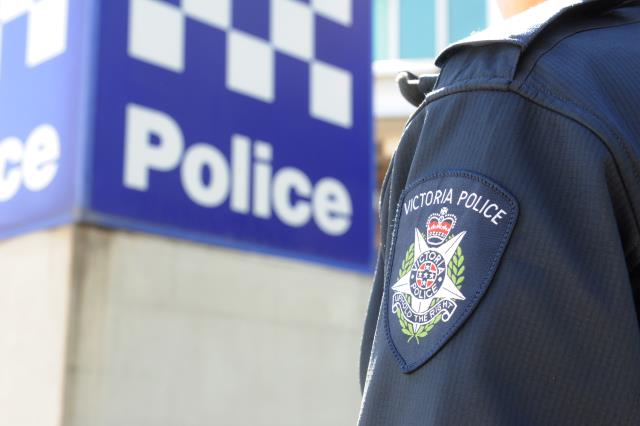
Hobsons Bay police inspector Bill Mathers mentions it several times during our conversation. He started out in the force at 24 in 1979, and it was then the young trainee’s role to gather and bag clothing and other “evidence” from bodies.
The psychological trauma that can result from working in emergency services doesn’t have to come from attending the ‘big one’. It can just as easily build up over time.
Despite this, Mathers thinks his job is fantastic.
But he says policing is an inherently dangerous profession, mentally and physically.
“I think I’m lucky ’cause I think I’ve come through it all relatively unscathed. As a policeman, you’ve got to have really good strategies for reducing your stress and putting things back into context.
“You can go to a car accident that’s a fatal . . . the worst ones are those that involve people dying . . . especially for police officers who have got young children and there’s young children involved. You have to go and tell the parents and relatives of the deceased that they’ve died and, to me, that’s equally traumatic. When I started in the police force, we actually had to strip the dead bodies and things like that, in the morgue, which I found very daunting.”
For Mathers, much of the trauma he encountered was under the West Gate Bridge.
On January 29, 2009, Darcey Freeman, 4, was thrown off the bridge by her father. A week later, Altona Meadows teenager Allem Halkic jumped to his death after being cyber-bullied.
The bridge was so infamous for suicides that many adults remember learning a macabre ditty as children in western suburbs schoolyards.
“The West Gate Bridge used to be horrific for our members with suicides,” Mathers says. “There’s nothing you can do to prepare for that.
“It’s something that can actually play on your mind and when you wake up three months later in the middle of the night you’re sort of seeing an image that you wish you hadn’t seen.
“I was lucky that when I was younger, I used to exercise a lot.
“There was a culture in the police force, which is still there — it’s changed a little bit — it used to be more alcohol-based then. Now it’s more based around being able to talk.”
Mathers says black humour develops among police as a way of dealing with traumatic occasions.
“To me, it was part of a culture that allowed you to actually put things back into perspective. You weren’t actually making fun of the situation; you were actually allowing your own psyche to get back into a normal synchronisation .
“Mental health is a huge issue. As police we go to a lot of suicides and my own personal opinion is that with depression and mental illness, you know, the term ‘black hole’ and things like that . . . it’s very apparent that some people are just screaming out for friendship.
“It’s almost like a hill. If you can get them over the top of that hill, then believe it or not, if they got over that one episode then their lives could come back to some sort of normality.
“But it’s hard for police, because we’ve got limited time.
“Sometimes we need some help to get over those hills and back to normality.
“The danger for police is you don’t want people to overthink things, you don’t want them to drink to excess, or do drugs — all those issues that face the normal community, face police.
“We’re all vulnerable and we all sometimes need support.
“I can’t emphasise enough, if someone’s got problems, then seek help.”
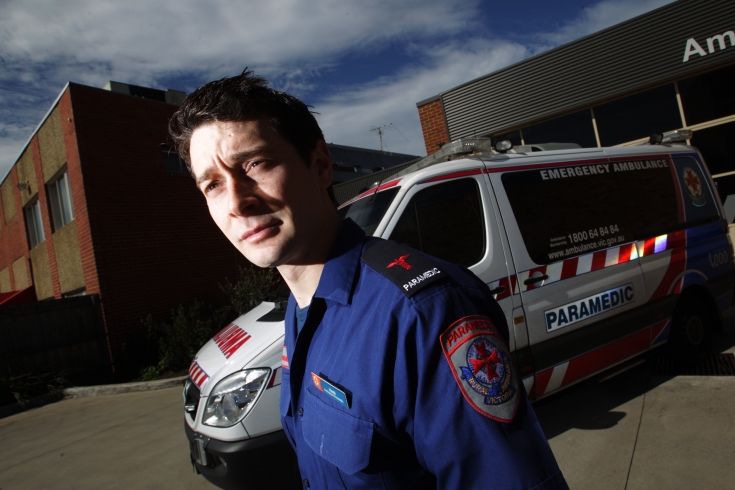
For a Moonee Ponds paramedic, the transportation of a seriously ill patient triggered traumatic memories from a decade earlier.
Heath, who asked that his surname not be published, doesn’t want to go into detail out of respect for the families, but he says it was jobs that reminded of personal experiences that could be upsetting.
“One [ambulance case] has reminded me of something that occurred to me in the past and I think that’s pretty common for most paramedics.
“They might find it a little bit upsetting if something has affected them in the past or reminds them of a certain situation.
“A close personal friend of mine passed away and the events of the case were extremely similar to that.”
Heath, who is stationed at the Dallas/Hadfield branch, started in the job seven years ago at age 21.
His wife, and a group of friends, are also paramedics and form a mutual support network.
“That’s probably the best way to debrief,” Heath says. “The other thing I guess I do is have a life outside of work. That’s a really important thing for me.”
It was when those two lives intersected that Heath recalls his second-most traumatic event as a paramedic.
He was driving in the country earlier this year in his own car when he came across a car smash involving six people, four of whom were badly hurt.
“That was probably the first road trauma that’s really affected me in some way and I think it’s because I wasn’t expecting it. At work, we’re lucky in the fact that we get a page and it might be five or 10 minutes before we get to that job, so we’re prepared.
“It’s different when you drive around the corner and all of a sudden there’s something in front of you and you don’t have that time to prepare yourself . . . there was almost a sense of vulnerability.”
When Sunshine firefighter and station officer Phil Menzies drives home at night, he occasionally sees a cross on the highway marking a fatal crash he has been to.
“You go past and you think, oh, that’s where that person died. I remember the car, but there were also four people that we got out.
“You do have to think positive, and we’re there to help people and that’s the way I deal with it anyway.”
His station, known as ’44 Station’, houses the western suburbs’ road rescue truck, which traverses the area bounded by Williamstown, Laverton, the Calder Park Thunderdome, Essendon Airport and Moonee Ponds.
The truck carries the ‘jaws of life’ to cut people out of mangled wrecks or release bodies or limbs caught in industrial accidents.
Menzies, who joined the brigade 27 years ago, says: “We’re not big, strong, tough people. We do have feelings.
“I can pull a firefighter off my truck if I feel that he’s suffering in some way.
“We’re a tightknit group in a fire station where we live with each other and camaraderie is really close, so you get to know each other fairly well and you can sometimes notice if a guy’s a bit off.
“If a guy who’s normally talkative is starting to be a bit quiet, a bit withdrawn, we’d ask if they’re all right, and say, ‘Look, if you’re having problems, you can ring our peer support’.”
Menzies, 51, says he’s lucky because he enjoys his four-wheel-driving and fishing — “just getting away”.
“Sometimes you do go, ‘Oh geez, I need a bloody beer here’ or something like that, and then I just go see a mate.
“I have been affected a couple of times.
“As a firefighter, I’d only been in the job about six months and I still remember there was a fire down in Footscray, off Moore Street.
“We turned up and the back of the house was going and I’ve raced down with the hose over my shoulder and I’ve gone around the corner and halfway through the door was this young girl.
“So I’ve grabbed her and dragged her out and put her on her back and there was this huge kitchen knife sticking out of her.
“I still know where that house is.”