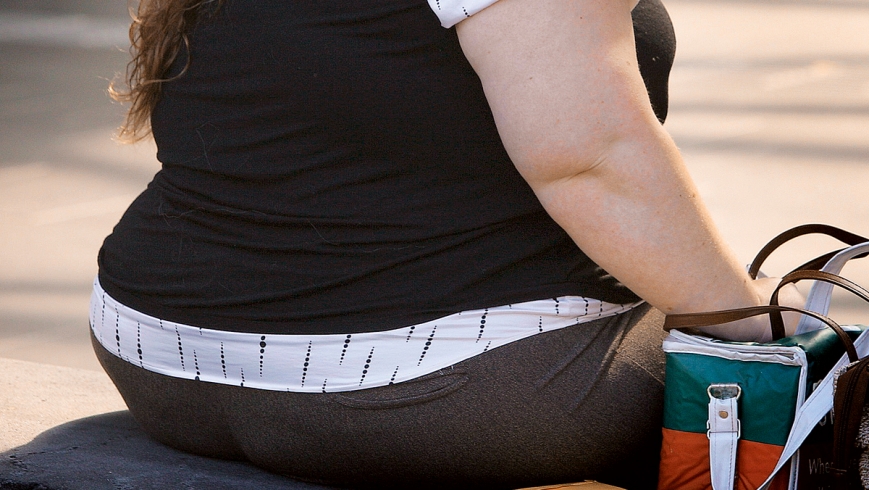
Compulsive, destructive vices are rampant in Western countries. For some, it’s nicotine, alcohol or marijuana. For others, it’s a pornography addiction, or a proclivity to gamble away a week’s wages in 30 minutes. What sets those with a food addiction apart is that they are physically forced to carry the heavy burden through being overweight or obese.
“They wear their binge,” says Associate Professor Gerard Kennedy of Victoria University. “These habits provide relief from psychological distress. It can be depression, loneliness or feelings of helplessness or hopelessness.”
The weight gain, however, solidifies the cycle of misery and bingeing, and being overweight is linked to intensified risks of problems such as diabetes, cancer and heart disease.
It’s a growing problem, with a Deakin University study of women living on Australia’s east coast finding morbid obesity had increased by 68 per cent between 1997 and 2008. In 2011-12, 63 per cent of Australian adults were overweight or obese, as were a quarter aged five to 17, according to the Australian Bureau of Statistics.
Compulsive overeaters don’t just go all out on dessert occasionally or pig out at a dinner party. Binge-eaters often eat huge amounts.
“We hear stories of people going to the supermarket at 11pm, buying a four-litre bucket of ice cream and downing the whole thing,” says “Elaine”, a member of Overeaters Anonymous (OA) in Melton.
To be classified as an overeater, a person must overeat at least once a week for three months. They often eat alone because they’re embarrassed about how much they are consuming.
“What follows is usually shame or disappointment, or questioning why they did it,” says Kennedy.
“When you speak to many obese people, they tend to say things like ‘when I lose 20 kilos I’m going to go out and have a good time’. And it’s a dangerous cycle where they won’t go out in places because they’re aware of their weight, which creates depression and encourages behaviours like staying home and eating away. Which will mean more weight gain.”
Elaine says many OA members have faced this their whole lives. “It hugely affects daily life. The minute you start shovelling food in you feel a huge sense of failure, which emotionally drags you down, frustrates you, causes you anxiety, you feel fearful that the weight will go on. It’s totally debilitating.”
Another OA member, “Diana”, says she has suffered from compulsive eating as long as she can remember.
“I was sexually abused before I was three and I turned to eating to take away the nasty taste of it. Until I reached OA, I couldn’t deal with the results of it. I needed all the tools, all the accountability, all the encouragement from people who’ve got the same problem.”
OA takes a 12-step approach similar to Alcoholics Anonymous, where a dedicated support group and acceptance of a higher power are essential to recovery. “AA talks about abstaining from alcohol, but we can’t talk about abstaining from food. We talk about abstaining from overeating. It’s difficult because people don’t see it as something you can give up, you can’t just not eat,” says Elaine.
She has been in the program since 2000 and has kept off the 36 kilograms she has lost since then. “My whole life’s been about taking it off, putting it on and back and forth, and OA has steadied me. I’ve still got another 30 kilos to go, but after 13 years I’ve come to a place where I can absolutely say no now.”
Kennedy weighs in on the effectiveness of combating overeating in a psychological way but does not discount physical measures such as gastric banding. “You need a combination. Most people that seek help know what to do, but don’t do it consistently, so they need to take an extra step.”
Sunbury’s Tash DiVito, 42, took the extra step in 2010 by having lap-band surgery after a lifetime of being overweight and “trying everything”.
Bariatric surgery works by restricting the amount of food that can be consumed, and reducing the body’s capacity to absorb it. It’s offered to those considered obese.
In mid-January this year, the Annals of Surgery reported on the longest study of bariatric surgery patients, conducted by researchers at the Centre for Obesity Research and Education at Monash University.
It analysed results of 3227 patients who had gastric banding between when the procedure was introduced in 1994 and 2011, finding that more than 700 patients maintained an average weight loss of 26 kilograms more than a decade after their procedure.
DiVito has lost 41 kilograms since she had the procedure, with a starting weight of 148.8 kilograms.
“I’m about halfway through and progress is starting to plateau now, but if I hadn’t had the gastric band I would’ve been back up to my original weight no doubt. Getting to under 100 kilograms would be amazing because I haven’t been there in a long time.”
DiVito’s weight before lap-band surgery affected her working life. “I had a really physical job when I was at my highest weight and I had to give it away because I couldn’t stand. My hips and my knees and my ankles were packing in. I had to change to a desk job just so I could function. I was in that much pain. Now that the weight’s come off, I’m a lot more active and the pain’s gone away.”
Before the procedure, DiVito was diagnosed with diabetes, which disappeared within a month of the surgery. She has also suffered depression.
“Although I still grapple with it, I haven’t had the problems I had in the past. Being treated differently because I’m not so huge has helped,” she says. “I’d be ignored in shops, glared at on the train. I felt like I had to be apologetic for being in someone’s space because I was just so big.”
DiVito says that while you need to address the psychological aspect of overeating, the banding helped her focus on her goal to lose weight.
“You need to work out why you’re overeating, why you’re not as active as you can be. It’s not the magic wand or pill, but it’s allowed me to get it under control.”
The federal president of the Australian Medical Association, Steve Hambleton, says bariatric surgery is only part of the solution and shouldn’t be seen as a panacea for a lifetime of overeating. “Lifestyle changes and diet still need to be applied in order for it to be successful,” he says.
Kennedy says people often play the blame game in dealing with obesity, and it shouldn’t be put down to a “weakness of character”.
“Some people are made to carry more weight. I’ve told patients it’s better to be a little larger and happy than battling to be skinny all the time and completely miserable.
“If that’s not you, you’re fighting a losing battle. If you are healthily large, make sure you don’t get larger, and stick to healthy eating patterns.”