TEGAN FORDER explores what it’s like to live with motor neurone disease (MND) and discovers those with the little known terminal illness don’t want it to define them.
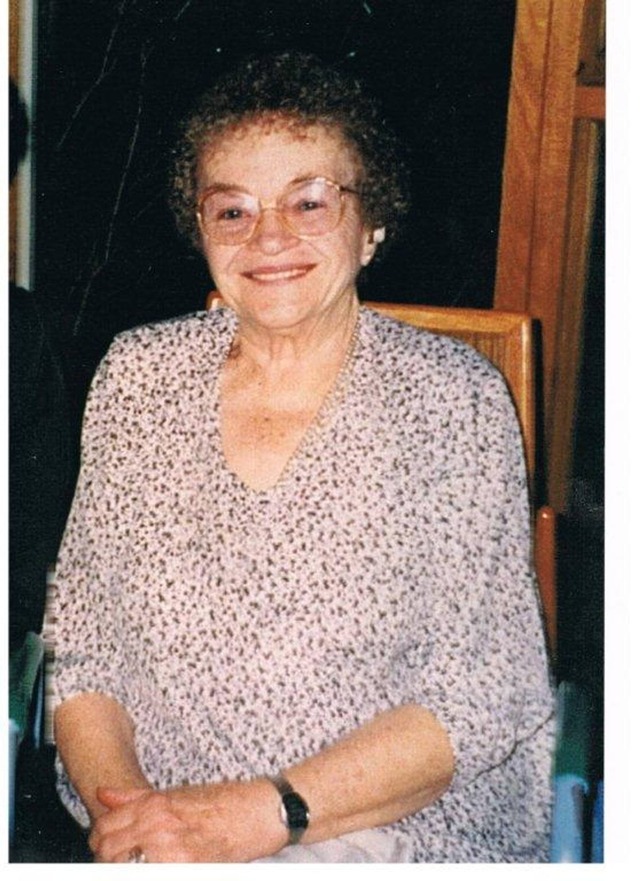
A few years ago, outer western suburbs resident Sylvia Herlihy noticed some words weren’t coming out right. “People at work would ask me to repeat a word as they couldn’t understand.”
A year on, the administration worker was referred to a neurologist. It took a further year to reach a diagnosis of MND after a process of elimination and exhaustive medical tests.
The news was shattering for the now 60-year-old and her daughters Amy and Alicia.
“We all cried, I think, for the first few months. I couldn’t talk to anyone and my daughters were the ones who told family and friends, which was a huge ask of them,” Herlihy says.
She is one of more than 300 Victorians diagnosed with MND. MND Association of Victoria’s records show for the 12 months from June 2011 there were 185 new clients registered with the organisation and 153 deaths.
MND is the name given to a group of diseases in which motor neurones progressively die.
The nerve cells that control the movement of muscles in the body under conscious control start to weaken and die and, with no nerves to activate them, the muscles gradually waste, and paralysis ensues.
Average survival time after diagnosis is two to three years, with a small number of people surviving five years or more.
“There’s no cure for motor neurone. It’s a terminal disease and there is no remission,” MND Victoria regional adviser for the western metropolitan region Sally Boal says.
The only treatment is the medication riluzole, although studies have shown it prolongs life only by several months.
Despite the terminal nature of the disease, there is a silent determination by those who are diagnosed with it to just get on with living.
MND Victoria family support services manager Julie McConnell says people with MND want to be treated like everyone else.
“They don’t want to be their disease.” Joan Uhr-Henry was diagnosed with MND last year but the always-active 83-year-old Footscray resident continues to dedicate her life to helping others.
A life member of the Footscray RSL subbranch, she has been an integral part of the service club, serving as secretary, president of the women’s auxiliary and running a day centre.
She also gave special rituals at the funerals of servicemen and affiliates until her voice became too slurred.
Among her many certificates of recognition are a meritorious service award, and most recently a national award for her service to the RSL.
Having lost her husband Fred, Uhr-Henry remains fiercely independent but does rely on support from Williamstown Hospital, the specialist MND team at Calvary Health Care Bethlehem and MND Victoria.
With the RSL, they were able to provide Uhr-Henry with an iPad to help her communicate, using an app which converts text to speech. This support is crucial.
As symptoms of MND progress, a feeding tube is inserted in the stomach of sufferers and non-invasive ventilation is used to help with breathing.
People with MND also need access to physiotherapists, speech therapy, occupational therapy, dieticians and social workers.
McConnell says more money in the disability sector to fund appropriate services would be welcomed.
She says it’s difficult to obtain funding for care packages through the Human Services Department for people under 65 and there can be a more than 12-month wait for those over 65.
Both groups are at risk of admission to residential care which is usually not their preferred option. Support can come in many forms.
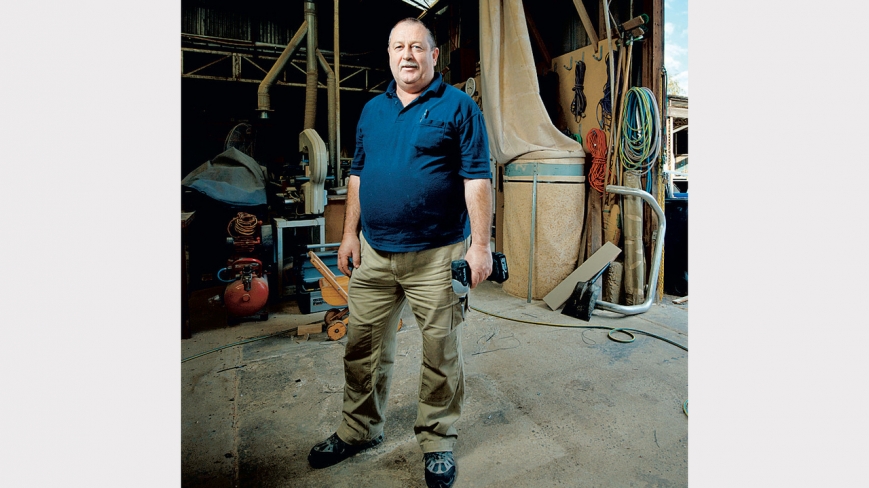
Peter Turnbull was diagnosed about two years ago and has been able to access money through a care package to complete some jobs around the house he can no longer do himself.
The 54-year-old from Melton wears a brace on his right leg to help him walk and MND Victoria has provided equipment including a recliner, wheelchair, and crutches.
A father of three sons, Turnbull first noticed something was wrong when he had trouble keeping a thong on his foot.
Thinking it was something to do with his back, Turnbull persevered for about three years before going to a specialist, who immediately referred him to a neurologist.
“The day I was diagnosed, I don’t know why, but as soon as they told me what it was I knew that was it,” Turnbull says.
“Something clicked and I thought, this is no good, there is no coming back.” With a pragmatic approach to life, the shop fitter and cabinetmaker continues to work at the business he’s operated for 31 years.
“I decided I’d keep working for as long as I can to keep my mind occupied so I’m not sitting around dwelling on it.
“Never once have I said, ‘why me?’ I know everyone gets dealt some sort of blow in their life and I didn’t question why it wasn’t someone else.”
Studies show people cared for by a multidisciplinary team live better for longer and McConnell says the new National Disability Insurance Scheme, DisabilityCare’s lifelong approach to providing care and support, will benefit those with MND.
“An NDIS will turn the way we currently provide disability services on its head. Rather than funding based on historical budget allocations, a funding pool will be based on actual assessment of need,” McConnell says.
“An assessment will look beyond the immediate need and across the course of a person’s life.” MND Victoria’s Sally Boal says it’s important for those with MND to maintain a network of friends and family.
“We don’t want people to withdraw their support because they’re uneasy about the disease or not sure what to do.”
Uhr-Henry’s close friend Pat Franks says Joan has many good friends at the Altona RSL, where she is now a member.
“We understand her and we make every effort to support her. If one of us can’t say where she is a search party is prepared to go out. We keep tabs on her. She mightn’t like it but we do.”
The thought that whatever she is doing is possibly the last time makes Uhr-Henry keep going.
“She keeps setting benchmarks,” Franks says. “I remember her saying ‘I won’t be here for Remembrance Day’ and then it was Christmas Day and then it was something else. It’s an ongoing thing.”
This day-to-day approach is also how Sylvia Herlihy copes. She says she’s fortunate she can be independent at the moment and still do things on her own because she knows this won’t always be the case.
Now their mother is retired, Alicia and Amy are keen to spend as much time with their ‘best friend’ as possible. The close-knit family took a trip to Borneo this year to get away and relax.
Amy says it’s exhausting grieving for something that hasn’t happened yet, and Alicia agrees.
“We’ll deal with it when we have to. I think in a way we’re lucky because at least we’ve got time we can spend with mum.”
Spending time with family and getting affairs in order is something Turnbull and his family also value.
Standing in the kitchen of their comfortable family home, his wife Bernadette says she’s happy now she made the family go for yearly holidays despite her husband’s protests.
They’re continuing the tradition and took their youngest son on a trip to Europe last year.
“That to me is a million dollars’ worth of memories,” she says.
MND FACTS
• An estimated 1500 people have MND in Australia and thousands more families and carers live daily with its effects
• MND is a rapidly progressive, terminal neurological disease
• There is no known cure and no effective treatment
• Each day in Australia two people die of MND
• Each day in Australia two people are diagnosed with MND
• Average life expectancy after diagnosis is 27 months
• People with MND progressively lose the use of their limbs and the ability to speak, swallow and breathe, while their mind and senses usually remain intactestimated 1500 people have MND in Australia and thousands more families and carers live daily with its effects
• MND is a rapidly progressive, terminal neurological disease
• There is no known cure and no effective treatment
• Each day in Australia two people die of MND
• Each day in Australia two people are diagnosed with MND
• Average life expectancy after diagnosis is 27 months
• People with MND progressively lose the use of their limbs and the ability to speak, swallow and breathe, while their mind and senses usually remain intact
MND Week runs May 5-11. Contact MND Victoria on 9830 2122 or visit mnd.asn.au