A specialised court, which had its first sitting day at the Sunshine Magistrates’ Court last month, is helping to improve the lives of offenders with mental illnesses, cognitive disabilities and intellectual disabilities.
The Assessment and Referral Court (ARC) was recently expanded to the Magistrates’ Courts of Victoria at Sunshine as part of a recommendation from the Royal Commission into Victoria’s Mental Health System.
The alternative court process was formed in 2010 to reduce the number of people with mental illness and cognitive disability in court and prison systems – groups that ARC Supervising Magistrate Ros Porter said “are overrepresented in the justice system”.
“ARC is designed to provide a tailored response to those people. And it is a more structured program,” she said.
At Sunshine Magistrates’ Court, ARC sits for three days each month, with the model accommodating 25 participants at one time.
For participants, the experience is quite different to attending mainstream court.
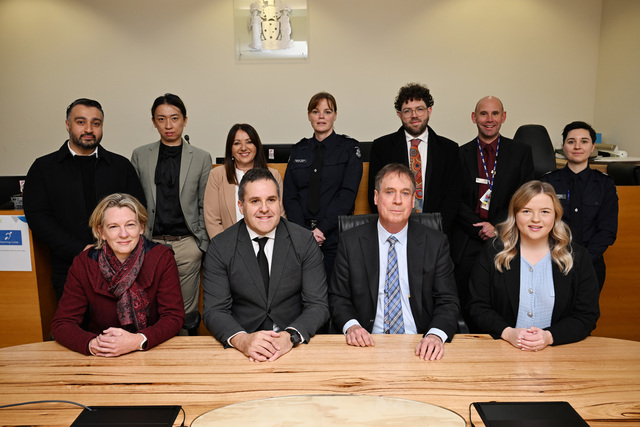
Sessions take place in an adjusted courtroom where a multidisciplinary team of lawyers, case workers and other support people sit at an oval table.
And instead of sitting at the bench, the magistrate sits at the table across from the accused.
Proceedings are carried out in an informal, conversational style to best meet participants’ communication needs.
“[It] very much provides an atmosphere for open discussion and it encourages the person before the court to participate in a very full and open way,” said Magistrate Porter.
Local ARC Magistrate Gregory Thomas has worked at the Sunshine Magistrates’ Court for three years.
The magistrate – who previously worked as a solicitor and a defence lawyer – said once participants get to know the magistrates and workers, they begin to see ARC as a place they can trust.
“As [participants] get used to how the court works, they really do come in and talk to the magistrates about their serious problems,” he said.
“They’ll be sitting at the bar table, they might be crying about being in crisis, or on another occasion be celebrating an achievement such as obtaining housing or completing a program – it’s a real journey.”
Magistrate Porter said the therapeutic court also benefits local communities by addressing the participants’ underlying causes of offence.
“One of the really important things that ARC does is it provides really strong linkages for people before the court back to the local community,” she said.