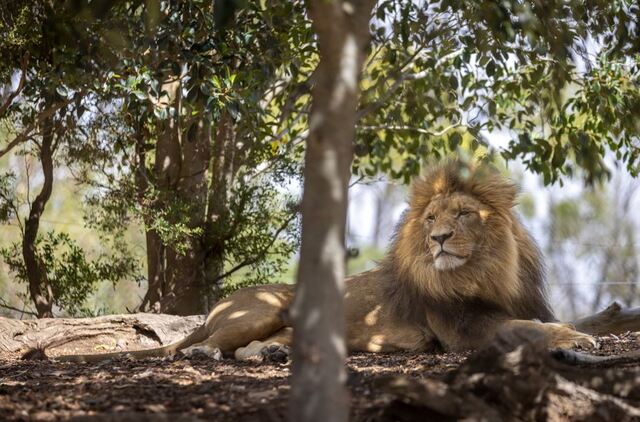
As the Victorian summer continues, zookeepers and experts from Werribee Open Range Zoo explained to Jaidyn Kennedy how they help the animals keep cool when the mercury rises.
Slip, slop slap. Stay in the shade. Keep hydrated.
People who have spent a summer in the Great Southern Land would have these sun safety steps down pat.
Well, not just people.
The animals at Werribee Open Range Zoo (WORZ) have their own ways of keeping cool during heatwaves in Victoria – some of which aren’t too different from our own tried and true measures.
WORZ life sciences manager Dominic Moss said Victorian heatwaves can be more intense and sudden, with sharp temperature spikes compared to other parts of the globe.
“[When] animals aren’t naturally adapted… extra cooling strategies are so important.
“Different species cool themselves in different ways.
“Some examples are that Elephants flap their ears to release heat, rhinos wallow in mud to keep cool and protect their skin, as do elephants, big cats pant and rest in shade, while smaller carnivores seek cooler ground or dig to escape the heat.
“In general, animals use a combination of behavioural and physical strategies to stay cool in hot weather.”
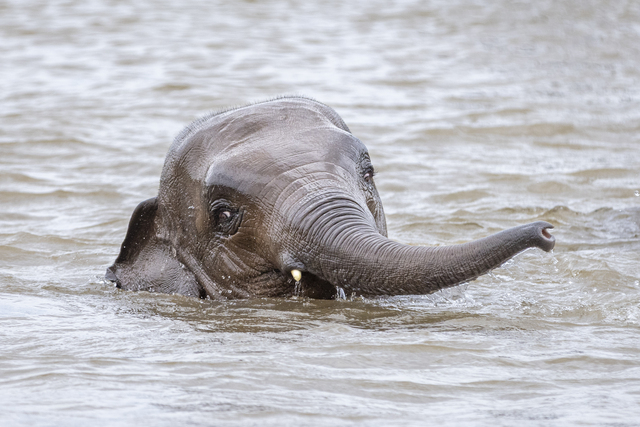
Leading what is known as the cool-down crew is the zoo’s nine-strong elephant herd, who have been making waves in nearly two million litres of water across the Elephant Trail’s two mega pools.
The scenes Mr Moss describes don’t sound too different to what happens at Werribee Outdoor Pool just up the road.
“The elephants love dunking each other, blowing bubbles with their trunks and splashing water over their backs, and the calves often treat the pools like a giant playground, sliding, chasing and copying the adults,” Mr Moss said.
The herd’s “cool aunty” Kulab, typically leads the pool parties, and calves Kati, Roi-Yim and Aiyara love to join in.
The zoo’s five Southern White Rhinoceros also choose a soak as their preferred form of cooling down, taking advantage of muddy wallows – rolling, splashing and basking for hours.
Mud proves to be an all rounder in the cosmetics department, serving as natural sunscreen and insect repellent all in one.
Having thick skin is typically considered a strength, but if not handled with care, it can be an Achilles’ heel on the sweltering savannah.
“Animals with thick skin, darker colouring, large body size or limited ability to sweat, such as elephants, rhinos and big cats, can be more vulnerable in extreme heat, particularly if conditions are humid or prolonged heat events,” Mr Moss said.
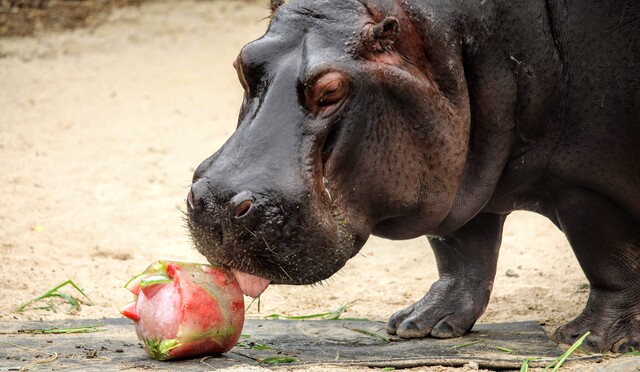
The zoo’s lion pride embrace the heat with frozen meat blocks hung from trees, encouraging jumping, pawing and teamwork.
Two-year-old cubs Jango, Mwezi and Kianga love to claw and tug at the icy piñatas before dragging them down and settling in for a long, lazy lick in the shade.
Across the African River Trail, Serval sisters Nanki and Morili leap onto tree stumps to reach iron-rich icy poles.
“The icy poles are made using animal-specific ingredients like meat, blood, insects and vegetables, frozen in moulds,” Mr Moss said.
Curious meerkats make sure they get stuck into insect-filled ice slushies that are scattered across rocks and tunnels.
“Meerkat slushies often include mealworms, crickets and other insects blended with water,” Mr Moss said.
“They’re completely safe for animals, but definitely not designed for human taste buds.”
The humans still enjoy them, at least in a non-consumptive way.
“All enrichment is carefully planned and prepared before animals enter the space,” Mr Moss said.
“Keepers work behind the scenes using protected contact methods, timing, distance and barriers so animals are safely occupied elsewhere before enrichment is set up.”
There are important reasons why these treats aren’t spoon fed.
African River Trail life sciences coordinator Ben Gulli said ice-based enrichment helps animals stay cool while still engaging their natural instincts.
“Hiding food in ice encourages foraging, problem-solving and physical activity, especially during cooler parts of the day,” Mr Gulli said.
“It keeps animals mentally stimulated, then allows them to rest once temperatures.”
While the animals are a smart bunch and good at managing their own affairs the zookeepers know what to do if there’s an emergency.
“Keepers closely monitor behaviour, appetite, movement and breathing, and watch for signs like lethargy, excessive panting or reduced activity, especially during extreme temperatures,” Mr Moss said.
He said teams will intervene if they suspect something is truly amiss.
“Animals are immediately moved, given access to cooler areas, given access to and the shade, water or mud, and monitored closely,” Mr Moss said.
“Veterinary teams are involved if needed, and cooling strategies are adjusted until the animal is comfortable.
The team is pretty attentive to the details that help minimise the risk of those situations occurring.
The maintenance of the rhino’s mud wallow is a pretty good example.
“Keepers regularly top up water levels, monitor mud depth and texture, and ensure the wallows stay clean and safe,” Mr Moss said
“During hot weather, wallows and pools may be refreshed more often to keep them effective and inviting.”
And last but certainly not least of all, he gave a little pro tip about how the zookeepers themselves keep cool during scorchers.
You could probably hazard a guess.
Plenty of water, wide-brim hats, sunscreen and occasionally an ice cream from the Ben and Jerry’s on site at Werribee Open Range Zoo.