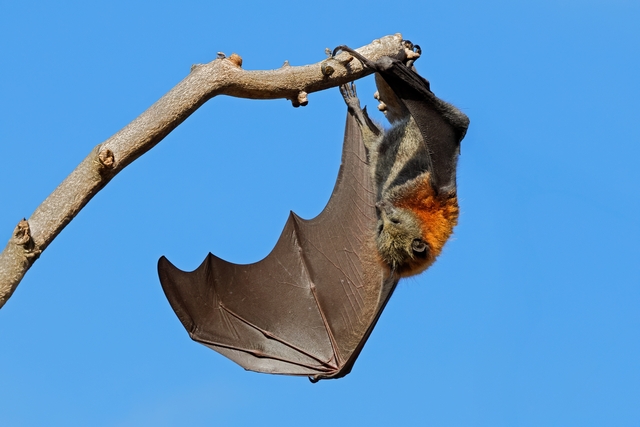
At least 800 grey-headed flying foxes were recorded dead in Brimbank Park during an extreme heat event this month, with rescue volunteers and an MP saying lives could have been saved if the state government had coordinated a statewide emergency response plan.
Temperatures climbed past 40 degrees on Wednesday 7 January, causing heat stress among the threatened bat species huddling in camps — tree patches where bats roost during the day.
In the late afternoon, bats in Brimbank Park began dropping dead from severe heat exhaustion.
Head of volunteer wildlife rescue organisation Fly By Night Tamsyn Hogarth said bats were in the direct sun for up to four hours.
“It just got too much for them so they started coming to ground. That’s when we started getting volunteers that were available to head straight there,” she said.
Ms Hogarth said volunteers were horrified by what they saw.
“[The bats] seek comfort when they’re dying so they all gravitate, start clumping on each other, and then they start suffocating. We try to prevent it getting to that point,” Ms Hogarth said.
“When they start clumping on branches, branches can fall from the weight as well and then they have crush injuries.
“It was obviously very traumatising and horrible for those rescuers to just see mass deaths.”
Bat deaths were exacerbated by a period of starvation due to an unusually cold and wet spring, according to Ms Hogarth.
A week earlier, Ms Hogarth contacted the Department of Energy, Environment and Climate Action (DEECA), asking for a coordinated plan for land managers and volunteer organisations ahead of the extreme heat day.
Under the Victorian Emergency Animal Welfare Plan, DEECA is responsible for planning animal welfare support services in emergency preparedness, response, relief and recovery.
Ms Hogarth said that after a period of no response, DEECA announced at the last moment it had only enough resources to attend three bat camps across the state, leaving scores of others, including the Brimbank Park camp, without support.
“I was just left pretty disappointed that there were no contingencies for this kind of situation; where [DEECA] have no resources to allow the volunteers to work with the land managers to get more resources in there,” Ms Hogarth said.
Ms Hogarth said preparations could have been made to have volunteers and vets on standby, and water tanks nearby to mist the camps to help hydrate bats and give them the energy to seek other areas for shade.
“We’re not saying that there would be no deaths, in that kind of temperature it’s pretty likely to have some deaths, but it would’ve reduced a lot of the suffering and we would’ve probably saved a lot more,” she said.
Northern Victorian MP Georgie Purcell joined Ms Hogarth in criticising the state government for its lack of preparedness.
“Make no mistake – it’s not a shock this happened. The warnings had been made in advance, and we know all too well that heatwaves can be deadly for bats. The government could have been more prepared for this, but the sad reality is that they weren’t,” Ms Purcell said.
“Our hardworking volunteers, who responded to this tragedy, deserved every support from the Department and it’s shameful that instead they were met with bureaucracy and inconsistent messaging.
“It is simply unacceptable that bats literally fell to their death. To not have a state-based, statewide response is nothing short of a failure.”
DEECA said its approach to managing flying-fox heat stress focused on human safety as the highest priority.
“We understand how distressing it can be for communities when flying foxes and other wildlife are impacted during extreme heat events,” a DEECA spokesperson said.
“Flying-foxes can carry diseases harmful to humans including rabies and members of the public should not touch flying-foxes under any circumstances. If you find a flying fox on the ground, do not touch it – keep pets away and call DEECA on 136 186 or use the Help for Injured Wildlife Tool to find a local wildlife rescuer.”
DEECA didn’t respond to Star Weekly’s questions about being underresourced, and why a statewide response wasn’t coordinated ahead of the extreme weather event.
Ms Hogarth said locals could help flying foxes by removing netting from fruit trees a week before heat-induced emergencies to allow bats greater access to food sources.
“We really want people to understand that flying foxes are an important species, they’re a major pollinator,” she said.
“We wouldn’t want 800 koalas or 800 platypus or any other threatened species to be lost in an afternoon.”