

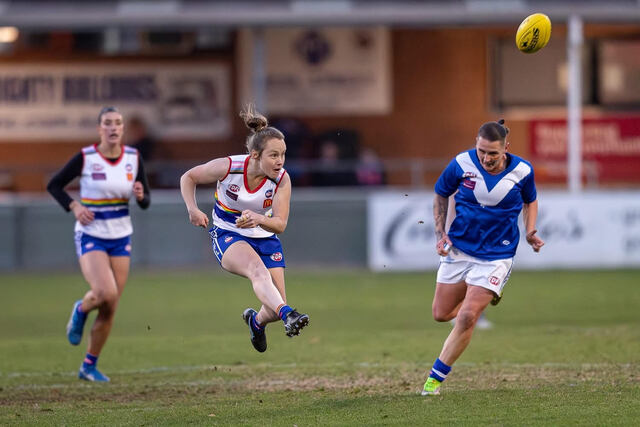
This article was originally published on 15 July, 2025. Star Weekly is sharing it again for you to enjoy.
Two programs aimed a boosting gender equity in sport have had their funding cut by the state government. The move has been labelled as “a “kick in the face” to women and gender diverse people and has prompted a local MP to launch a petition calling for the funding to be reinstated, Sam Porter reports.
The state government’s decision to cut funding for two major programs aimed at improving gender equality in sports across all levels has sparked significant backlash.
Northern Victorian MP and Macedon Ranges resident Georgie Purcell launched Legislative Council petition last month – alongside The Kyneton Women’s Football Club, Women’s Sport Australia and Not All Clubs – calling on the state government to reinstate the Office for Women in Sport and Recreation (OWSR) and reverse cuts to gender equality and violence prevention programs.
The petition currently has over 1200 signatures.
Ms Purcell said the cuts will have “disastrous impacts on women and girls” and are “completely inexcusable”.
“We are in the grips of a gender-based violence epidemic nationally. We know the consequences of gender inequality are as clear as day,” she said.
“This isn’t just about cuts to sport – it’s a major roadblock in our fight against gendered violence.”
The OWSR was established in 2017 and aimed to boost the participation of girls and women in sports, as well as in leadership roles at clubs.
It did this by providing Change our Game grants to local clubs.
Clubs were able to use these quick-release grants to make community sport a more welcoming environment for girls and women, by upgrading equipment and facilities, developing coaches and staff to work better with women, and increasing the number of women in club leadership positions.
The second program cut from the budget was the Preventing Violence Through Sport Grants Program, which provided funding for partnership programs addressing gendered violence in sporting clubs.
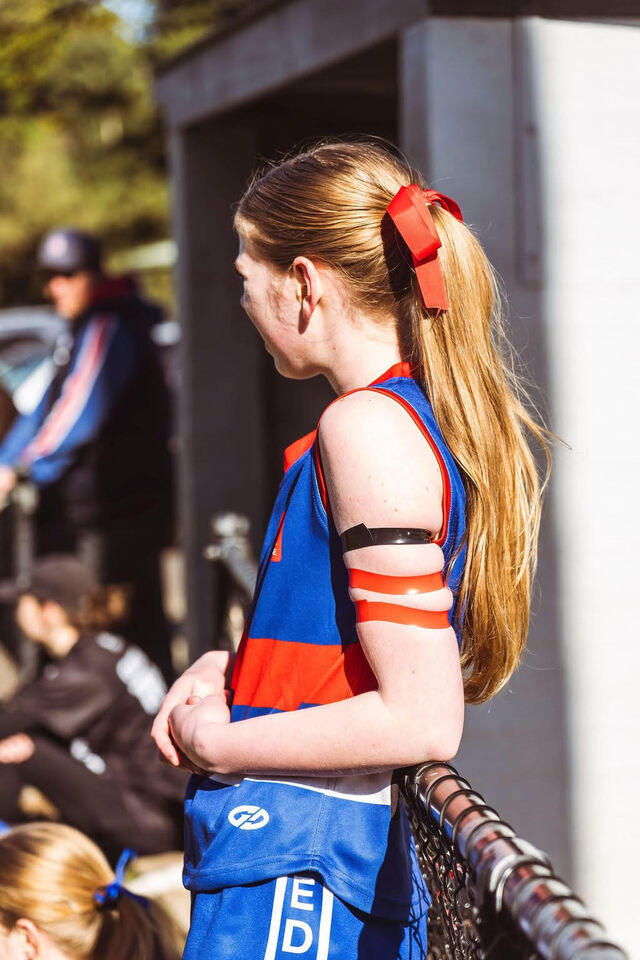
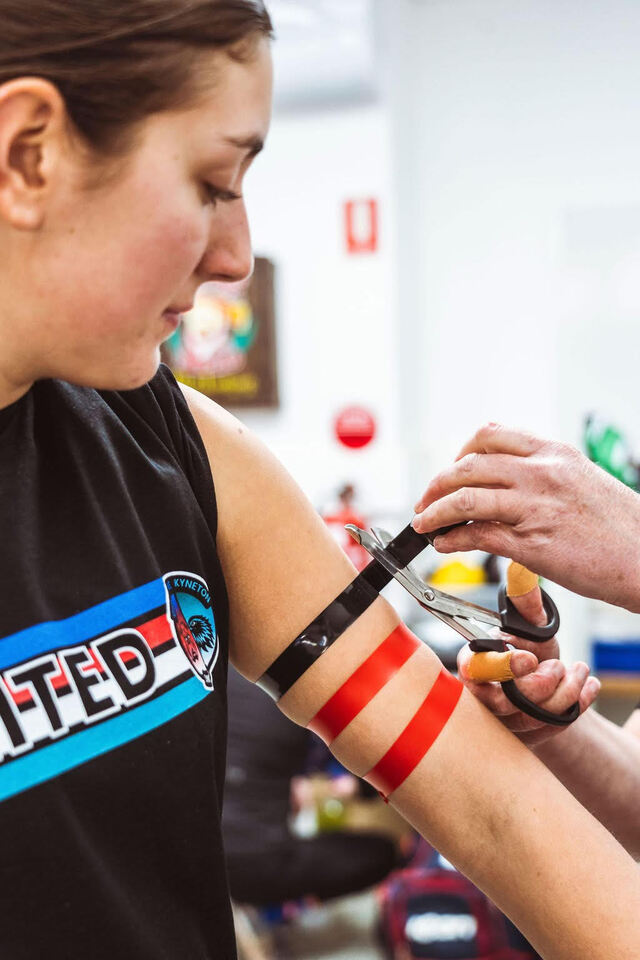
Kyneton Women’s Football Club president Natalie Korinfsky said she is “devastated and disappointed” by the cuts.
“We’re having to fight for something that we feel like should just be in place to support women and girls in sport,” she said.
“These are really important programs … to see [the funding] taken away just feels like a bit of a kick in the face to women and girls and gender diverse people across our state.”
According to OurWatch, 39 per cent of women have experienced violence since the age of 15 in Australia.
On the sporting field, this violence can take form through gender stereotyping, sexist comments, spectator abuse, and physical and sexual assault.
“Something isn’t going right in community sport … women and girls aren’t feeling safe enough to stick around and keep playing,” Ms Korinfsky said.
“We want women and girls to feel safe. We want them to feel like they’re getting a fair go.”
Ms Korinfsky said that at local sporting clubs, women’s teams tend to receive ill-fitting uniforms and second-hand equipment, and are often given the last choice for training sessions and match timeslots too.
These slot structures sometimes do not allow for proper recovery time, leading to an increased risk of injury, she said.
“You’re always getting the fringes of what everyone should be entitled to,” Ms Korinsfky said.
“We need a broader campaign and support to help shift this because it isn’t just about shifting it at clubs, it’s shifting it at a cultural level, it’s shifting it at a community level and we feel like it is the responsibility of the government to be pitching in, to be helping change that rhetoric.
“It feels like we’re going backwards in a space where we know we need these programs and this funding more than ever.”
The view is shared by La Trobe University Rural Health School associate professor, Dr Kirsty Forsdike.
Dr Forsdike’s research focuses on organisational responses to gender-based interpersonal violence.
The program she leads in central Victoria was one of the 12 collaborations funded through the Preventing Violence Through Sport Grants Program, which has now been cut.
The program’s evaluation reports were initially due at the end of May – about the time the funding cuts were made by the state government.
“[The state government] wouldn’t have had a chance by any manner of means to go through all those reports and really fully assess the benefit of that program,” Dr Forsdike said.
“It’s like they haven’t cared about what’s been achieved.”
As part of the program, Dr Forsdike brings together a range of stakeholders – council, sports administrators, researchers, sports players, and family violence and sexual assault services – to review research findings and to discuss main issues and priorities to reduce gender-based violence in sports.
These discussions guide the program towards developing tangible solutions to make women and girls feel safer in community sports.
One of these solutions is to implement appropriate training for staff at Regional Sports Assemblies to better handle incidents of gender-based violence reported by clubs.
Regional Sports Assemblies, which only exist in the state of Victoria, are hubs that provide support, services, information and opportunities to community clubs in regional and rural areas.
Providing formal training for sports club leaders was also identified as a necessary step in reducing incidents of violence against women.
“Sometimes we forget the culture of sport in Australia – how important it is to Australian culture but also how it’s a space that’s often been male-dominated,” Dr Forsdike said.
“While we’ve seen a dramatic increase in women and girls playing sports brilliantly, as we should, they’re often going into spaces that perhaps aren’t well set up for them to be there safely.”
A state government spokesperson said he functions of the Office for Women in Sport and Recreation would continue to be held within Sport and Recreation Victoria.
“We will always support women and girls’ participation in sport and recreation,” the spokesperson said.
Dr Forsdike said the programs were “huge” and “absolutely unrivalled anywhere else.”
“We were the pinnacle. You could hold up Victoria as the way to do things and that’s all been obliterated by just one decision,” she said.
“I’m yet to see the Victorian government change its mind [on the cuts] and I really hope that they do. It’s a misplaced decision.”