This article was originally published on 11 March, 2025. Star Weekly is sharing it again for you to enjoy.
In an Australian-first, a Vietnamese museum and cultural centre will be built in Sunshine, sharing the stories of migration and refugee settlement. As Prealene Khera discovers, the museum will act as a “memory palace” for the Vietnamese community.
In December 1981, Thanh Tran found himself desperately clinging to the side of a boat with half his body fighting the pull of an unforgiving sea, and a machine gun aimed at the back of his head.
Between the palpable heat of the bullet whizzing past him, and the wet splintered wood grating his fingers – he could only think of escape.
That day, six years after the South Vietnam capital Saigon fell and the bloody protracted war concluded, Thanh was caught attempting to flee from the clutches of a country deeply engulfed in economic and political turmoil.
He was jailed for nearly four months and was only released after his father bribed authorities.
Between 1981 and 1984, Thanh tried to escape 21 times, resulting in two additional prison sentences.
Towards the end of 1984, he finally got away. He left the shores of Vietnam, shoulder to back, with 90 passengers corralled in a narrow damp boat slightly longer than a regular city bus.’
The salt in the wind was made sweeter by the promise of emancipation in the horizon.
During that turbulent journey, the engine of the not-fit-for-sea vessel malfunctioned, leaving the refugees stranded in foreign waters, roughly 500 kilometres from Malaysia.
They drifted helplessly for 19 days, enduring dehydration, grief, and the harrowing death of four young men.
Eventually, Thanh and his fellow passengers were rescued by a French ship and taken to Hong Kong where they were placed into refugee camps.
Seven months later, Thanh was on a plane to Australia.
“When I landed, I felt like a caged bird being released,” he said.
From 1975 to 1995, more than 1.4 million Vietnamese refugees, like Thanh, sought freedom by undertaking a perilous journey on overcrowded and crippled boats, hoping for a better future in other countries.
In those 20 years, Australia took in more than 110,000 asylum seekers from Vietnam.
Their arrival on safer soil translates to hundreds of thousands of stories that have for the past five decades been restricted to oral retellings – until now.
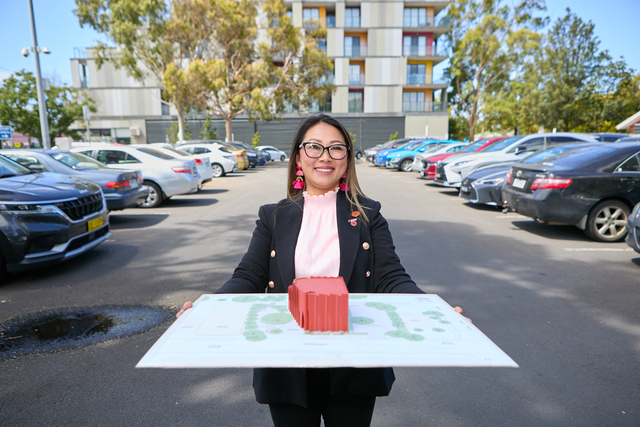
The country’s first Vietnamese museum and cultural centre was recently given the green light to be developed in Sunshine.
Once complete, it will preserve the stories of migration and refugee settlement.
The $20 million Vietnamese Museum Australia (VMA) will record, exhibit and educate citizens through living artefacts, preservation and interpretation.
It will also inspire the future generations of Vietnamese-Australians, ensuring the refugee history isn’t lost to the passing of time, according to VMA president Tammy Nguyen.
“I really believe that the Vietnamese refugee story is a significant part of Australian history,” Tammy said.
“When the White Australia policy was abolished, the Vietnamese community were among the first beneficiaries of that, and their migration has really shaped multicultural Australia today.
“The one thing the Vietnamese people can carry with pride is our indomitable spirit and this museum will create a space where we can honour the stories reflecting that resilience.”
While the landmark institution will house incredible stories of the Vietnamese “boat people”, the centre’s facade is equally symbolic.
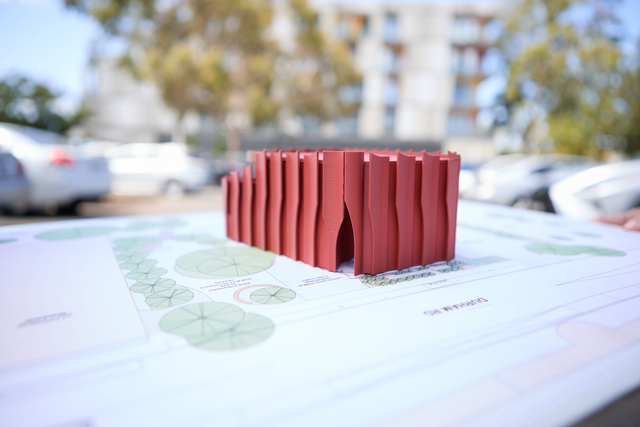
The museum’s design includes tall, red panels resembling bamboo, uniquely arranged to reflect towering waves.
This distinctive exterior represents the fusion of Vietnamese culture, the arduous refugee journey by sea, and the iron-rich red soil of Australia.
“There’s been a lot of thought that’s gone into the design,” Tammy said.
“We wanted to have ties to our new homeland as well, so the reddish colour is very important.
“The Vietnamese community is so grateful for the opportunity to have been accepted into the country – we wanted to incorporate that and honour that too.”
The VMA team has also put in extensive work to connect with a large number of community members to create the museum’s exhibitions.
“There’s a great urgency in gathering those oral histories as the first generation of Vietnamese people, who arrived in the 1970s, are now aging rapidly, so it’s critical to collect their stories,” museum advisor Paul Bowers said.
“We’ve also put in a lot of time bringing together artifacts such as photographs, diaries, records of the journey, the arrival and of people’s subsequent lives and successes in Australia.
“Creating a museum isn’t just about what exhibits are shown in the galleries, it’s also about what collections are built for the future of ongoing research and study.”
The museum will not only tell the stories of how the community has grown from refugees needing a home to becoming a vibrant part of Australian culture, but it will also point to where their future might lie.
“If we don’t know where we’ve come from, we can’t really think through where we’re going,” Paul said.
So, he added, this museum is a “memory palace” for the Vietnamese community, and a bedrock for posterity.
While it may be a critical reservoir of formidable accounts for succeeding generations, the promise of a Vietnamese-centred cultural space in Sunshine is already making waves within young people in the community.
As a daughter of displaced refugee parents, for 25-year-old Liên Ta, the development of the museum has come as a pleasant surprise.
“Growing up there wasn’t a lot of acknowledgement of the Vietnamese community, so it feels like the museum lends us more legitimacy,” she said.
“Even though I was never a refugee, it is a part of my identity, because it is a big part of my parents’ identity, but it wasn’t something I could really explain to others.
“With this museum, people will be able to understand a part of me that even I couldn’t adequately put into words.”
Liên said, as someone who grew up feeling unseen, there was never the expectation to be understood.
No longer side-lined, the community’s stories will never again be out-of-sight or masked.
“To archive something is to see it as worthy of being remembered,” Liên said.
The ground-breaking ceremony on March 16 will mark the start of construction on the significant VMA centre, which is expected to open late next year.